It's great how different activities make you notice particular facets of the weather. The winds today were about 20 to 30 mph, which feels so gentle in a car and still relatively calm on your porch, but on the bay today they were fierce! Salt spray everywhere, waves crashing into the top of the kayak. Sunglasses were fogged by the water and quickly crusting salt, yet eyes also seemed too frail for the deluge of saltwater that met them with every thud of the kayak into the next approaching trough. Squinting into the oncoming salt and drenching waves worked best. Exfoliation at its most thorough.
Our journey through Pleasant Bay felt not always pleasant or calm, least so when the boat captain slowed down to ask us if we were okay during a period of routine paddling (guess we looked more fatigued than we thought!), but the trip left such pleasant aftermath. The winds still gust outside, but inside my little cabin, they sound like a backdrop. I'm warm, comfortable, and content. And sleepy. While earlier I was stretched and pushed by the wind in the bay, I'm now soothed by it. A beautiful windy day and a breezy night to go with it (even the adjective changes once I'm no longer worried about being capsized!). A wonderful windy day.
Sunday, June 23, 2013


Thursday, June 20, 2013
sunglasses
I've always wanted to get a pair of rose-colored sunglasses, just to see what the world really would look like through them. Would it really be better than polarized, just plain dark-colored sunglasses that make water look better than real life? How could rose-colored glasses top that?
Wednesday, June 12, 2013
signs at a rally
I saw some great signs at a rally yesterday in West Capital Park in Albany. Here's a small sampling:


Looks like the State Education Department spent the most time on their sign.


Looks like the State Education Department spent the most time on their sign.
Monday, June 10, 2013
parade residue
I woke up this morning and the streets were paved with glitter! If only every parade left its mark the day after like Pride does. Day-after Christmas cookies, scattered in boxes, after Christmas parades? Bunnies jumping around after the Easter parade? Revolutionary-era fife music playing on the streets the morning after the fourth of July? Beer all over the streets after St. Patty's Day? Oh wait, that one's real.
Sunday, June 9, 2013
duck pride
All spring, I'd been wondering where the baby ducks were. I kept scouring the pond, looking for signs of females and their babies, but no luck.
About three weeks ago I finally gave up on the ducklings, figured maybe it was just too lean of a year. . . but then today! Two mother ducks swam in formation with nine adorable ducklings around the fountains of the pond.
Today was also the pride festival in Albany. Guess the ducks were finally ready to come out. . .
Thursday, June 6, 2013
the muskrat waddle of shame
Saw a muskrat by the river trail yesterday. He was fine until I slowed down-- I think my staring made him uncomfortable. He waddled away in a way that made it seem he could stand to lose a few pounds, but I guess that awkwardness just comes with being a muskrat. All the substance of the beaver without the glory of the tail.. .
(on second glance, though, looks like a few muskrats have shed their humble beginnings)
(on second glance, though, looks like a few muskrats have shed their humble beginnings)
Monday, June 3, 2013
just plane fun.
one kid to another while traveling: "why you always crying? you miss everything!"
man next to me, who was from montreal: "when my kids were little, we stopped in albany all the time. we ate at that place-- crossgates? yeah, the mall! oh yeah, albany's a great place."
man next to me, who was from montreal: "when my kids were little, we stopped in albany all the time. we ate at that place-- crossgates? yeah, the mall! oh yeah, albany's a great place."
Friday, March 29, 2013
Trains, Planes, and Zoning Out
I think part of what's freeing about travel is the lack of to-dos. Sure, there are the preparatory tasks of booking the trip, ensuring that your boarding passes are printed and the luggage properly stowed, but the time of travel itself-- waiting for the plane or train, then sitting on it-- has already been budgeted for travel. Simply sitting in your seat marks an accomplishment-- check! You're traveling!
I feel most fulfilled during travel when I set my mind to what the trip has freed me to pursue: Nothing. A blank stare, soaking in new surroundings, letting my mind lapse into its own subconscious. . . In non-travel times, I too often only welcome this passive meditation on life during long runs or bike rides. Travel is their equivalent, the calm exception to my constantly swirling thoughts.
Yet, it's in these times of stillness that my mind moves the most, leapfrogging problems and exposing the fluidity of obstacles I'd always assumed solid. Travel's waiting periods are for the impatient a time of forced meditation. Makes you wonder, what's so bad about waiting after all?
Sunday, October 21, 2012
sleepy drift of autumn
I like how we fall asleep in fall. Not Rip van Winkle style, but not that familiar nightly sleepiness either; rather, we slowly drift off to a slower pace of life.
I love that. As leaves and plants die around us, as bugs go dormant and squirrels search for sustenance to bury in their secret stashes, and as the warm air rushes out to make wind for the cold and leaves blustery days in its wake, we all retreat into our shells of indoor shelter, family time, and a slower, more carefree sense of self.
Every season has its own stresses and releases. Summer is warm, lets you blow off steam outside, and remains synonymous(often ironically, sadly) with "vacation." Yet, those hot days bring with them bugs that sting and bite, hot weather that suffocates even the most fervent outdoor enthusiast, and wet, wet, wet weather (here in the Northeast of course-- obviously not so much of a factor in other regions).
But fall! The weather is often wet, yes, but only temporarily so. The cold air refuses to hold the heavy moisture that tugs down the droopy summer air. We are left with crisp, even if wet, days that beckon even the most content coach potato to wander outside, even if the weather harbors menacing intentions. . . for instance, we had dinner with friends last night and mentioned how beautiful the day was. They stared in disbelief. Apparently, one town over, it thunderstormed all day. The sunny, breezy, perfect fall weather that lured us and our bicycles outside didn't shine 20 minutes away from us.
And this, despite its unfairness, is the beauty of fall. For every time that we end up under the rainclouds, we end up another time in the sun. While those stormy days might seem a waste in a summertime full of planed outdoor fun, those cloudy days invite a certain sleepiness of the season in the fall. I welcome the dreariness. It's somehow becoming to the character of the season.
I'm lost, full of dry color, in an autumnal drift. . .

Friday, August 26, 2011
Unpave the Parking Lot
On my walk to school, I pass through a strip mall. It's between one of Albany's main roads (four whole lanes! I love small cities), and the university, so walking through it helps keep my vulnerable pedestrian self away from main thoroughfares.
A friend of mine who actually grew up in Albany (I'm a newcomer) pointed out to me one day this spring that this strip mall-- excuse me, "shopping plaza"-- is one of the more uppity strip malls in the area.
Once I gave up trying to understand the the compatibility of "upscale" and "strip mall," I moved on to the sadness of this reality. A "trendy" place for people in the area to visit, complete with local bakeries, restaurants, grocers, and even a non-local Starbucks, was a U-shaped, fifty year-old strip mall whose fancy stores enclosed a massive parking lot.

The buildings themselves are not the problems; walking beneath the awnings is pleasant and comfortable, glancing at fellow shoppers/eaters/wanderers gains you greetings, often from familiar faces.
It's that massive parking lot, that center of the community that we are supposed to overlook, but that seems to swallow your consciousness as you sit in the outdoor seating of these quaint shops. Cars and buses drive by, and by, and by; the parking lots spaces fill and empty, fill and empty, and your lunchtime view becomes awashed with bright sunlight reflecting off car windows (or, more often, a mural of rained upon automobiles).
I complain not to snottily snub cars, but to suggest an alternative. This ample parking space could be minimized; there is office parking behind the U-shaped plaza that never fills, and the massive lot could bear a reduction in size, as well.
If, in place of this parking lot, we tore up the asphalt and re-planted grass and flowers, the Strip Mall-- sorry, Plaza -- would seem much more like a plaza than the car-centric current parking-lot-surrounded-by-shops.
Children, families, college students and the elderly could romp, walk, or play in the new tranquil green space. Those dining in the out-of-doors could look onto this peaceful green environment in the summertime, or onto the pure, silent snow during winter months. Businesses would not suffer from the reduced parking thanks to the aesthetic pleasure the shopping center would now provide.
Buses would still service the Plaza, with enhanced ridership due to the minimal parking. Locals, as well as students at the nearby university would hop on the transit rather than drive themselves, not motivated to deal with the headache of parking.
Now a park and a shopping area, the Plaza could become a real community center, complete with a natural respite from the city like the European plazas of yore. The neighboring mega-mall would suffer from the increased visitation to this locally-run, locally-shopped mall-- which would now be a "mall" in the open-air, communal gathering space sense of the term (think D.C).
If we "paved paradise and put up a parking lot" in the 1950s and 1960s, can't we at least think about re-planting paradise now? Let's start by transitioning to greenspace facilities that already exist.
Thursday, August 25, 2011
Yet another reason why grist is amazing.
Devastation photos from this week's earthquake:
http://www.grist.org/list/2011-08-23-photos-of-devastation-from-the-east-coast-earthquake
http://www.grist.org/list/2011-08-23-photos-of-devastation-from-the-east-coast-earthquake
Wednesday, May 4, 2011
Jackie Tackles the Great Mysteries of the Universe, #3: Baby leaves
We all think baby animals are cute (most of the time. . . I suppose baby rodents who have not yet grown fur lean closer to "creepy" than to "cute," but we can agree on this general premise, I hope). Anthropologists have hypothesized that this cuteness is an evolutionary mechanism that permits greater survival of babies. It's hard to hate something that's cute, even when it spits, poops, and vomits all over you.
This spring, I've started to wonder why we don't apply this baby love to leaves. Do baby leaves just not inspire the same cuteness factor as baby humans?
After the long, long, long winter that we have had in upstate New York (my Georgia roots are still frozen), I have gloried in the emergence of buds and now, finally, leaves of the trees. The baby leaves are adorable. I keep wondering on my long walks to school, full of baby oak leaves, baby maple leaves, and baby pine cones, why I haven't seen more photos of these tiny bundles of joy in screensavers and other generic nature photos.
Surely I was merely ignorant of the devoted following of baby leaf peepers (parallels of the devoted autumnal leaf peepers in the Northeast, who vacate their city dwellings in mass droves to glimpse real life trees in the fall). I rushed home to google "baby leaves," and see what adorable photos came up that I could coo over for the next ten minutes.
Of all of the google images that loaded on the first page, only a handful included pictures of baby leaves on trees (please take a moment to admire the scientific integrity of the short study I conducted. . . Thank you. Back to the article).The rest of the photos consisted primarily of--gasp!--baby lettuce, read to be eaten! And even small children, some with leaves around them-- presumably not up for eating.
My conclusion is that baby leaves are more attractive to grown-up plants than they are to adult humans. Mature trees likely think nothing of the cuteness of our human babies. Big eyes! Pshh. Where are the bud remnants making way for the tiny leaf veins? That's where it's at.
The only problem with my conclusion is that I still find baby leaves cute. Maybe other humans agree with me, and we have simply all done a poor job communicating our love of baby leaves. Or, perhaps I am part tree on my father's side. I'll have to look into that.

Baby Pinecones and Needles (I include this irresistably adorable photo to sway you to the side of baby plant love)
Wednesday, March 23, 2011
Jackie Tackles the Great Mysteries of the Universe, #2: Knot that poor tree!
Are knots on trees embarrassing? Do the trees try to pretend they aren't there, like pimples?
Perhaps the northern pines, with their low, full branches, make fun of the pimply, adolescent oaks with their bumpy trunks.
Maybe, though, the once-thriving branches represent to the oak trees lost limbs, symbolic of paths not taken. Or perhaps their ill-fated attempts at branching out haunt them as constant reminders of what was, what could be-- a phantom limb of a tree that grew past its initial failures.
I'm not sure how trees really feel about their knotty pasts. I just know that if I had arm nubs lining my abdomen, I probably wouldn't stand as proud as a magnificent oak.
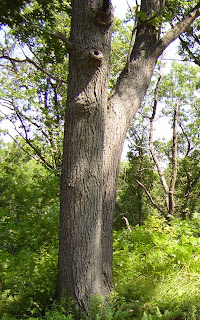
Perhaps the northern pines, with their low, full branches, make fun of the pimply, adolescent oaks with their bumpy trunks.
Maybe, though, the once-thriving branches represent to the oak trees lost limbs, symbolic of paths not taken. Or perhaps their ill-fated attempts at branching out haunt them as constant reminders of what was, what could be-- a phantom limb of a tree that grew past its initial failures.
I'm not sure how trees really feel about their knotty pasts. I just know that if I had arm nubs lining my abdomen, I probably wouldn't stand as proud as a magnificent oak.

Tuesday, March 22, 2011
Why I’m quitting grad school to become a Socialite . . .
My mother raised me to be a feminist. My sisters and I weren’t allowed to be cheerleaders (“do sports, don’t pay for uniforms to watch them!” I can hear my dad say), we were told to conduct our future careers independent of what the men in our lives thought, and our first Barbie doll was Business Barbie (her skirt was reversible: business on one side, party on the other).
Social skills weren’t going to get us through life, so they usually took a backseat. Grit, academic success, and athleticism would pave our way out of the muddy prospects obedient women faced.
So don’t tell my mom what I’m about to tell you: My latest forays in academe have taught me that I was born for the world of conversation. . .
As part of my graduate teaching assistantship, I attend weekly meetings with a member of the History Department faculty. We hear how they approach teaching and a professorial lifestyle in general.
Like most things I’ve experienced in my short time on this earth, this class always convinces me of exactly the opposite of its intentions.
Bear with me for these first few long and far-fetched steps. By the end of this post, I’ll have you convinced that I need to drop out of school and marry a politician. . .
The professor who came to speak with us is a perfectionist (I apologize for the redundancy of that last sentence). He told us that every day, when he leaves his classroom, he thinks about what he did wrong in class, and how he could improve on that next time. He explained that this emerged out of his passion for teaching, as it should in ours.
As he explained his self-critical ritual, I realized I’m not nearly that hard on myself when I finish the weekly discussion sections that I lead. I usually just pat myself on the back for the one kid who actually quoted from a book the entire class “read.”
Did this mean I skulked through life in mediocrity? Did it mean that I lacked pride in my work?
Probably. But it got me thinking, what DO I agonize over after completing? My writing? I’m pretty sure you could read through typos in the bolg and see that answer is no. My cooking? Just ask my boyfriend who gets to try all my half-baked experiments for a straightforward negative on that one.
The only parts of my life that I replay over and over in my head, to the minutest detail on the most mundane situation, are my social interactions with other people.
Using my unmathematical, historian-trained sense of logic, I can only determine that this means my true calling must be talking to people.
Some examples of the depths of my commitment (if that's why self-criticism means, as the professor implied) to conservation:
When I send an e-mail and the phrasing is off, just awkward or rude or too straight-forward, I can’t get the blunder out of my head for days.
Or, I’m sure you all can relate to the times you tell a story that was supposed to be short and hilarious, but somehow drags on and on out of your incredibly dull mouth, yet as you look around at the un-amused, vacant stares of the people listening you somehow can’t remember how to hit the brakes.
Those listless stares haunt me before bed as I relive the awful moment and try to figure out what went wrong. When did it become too long? How could I have spruced up the tale? Is a possible retelling in my future or should I scrap that story for good?
Jokes are more of the same. Was it the audience, or is the joke actually not funny? Or perhaps that situation just didn’t lend itself to jokes and I should have stuck with a more serious story? (Note to self: don’t point out word plays when someone is mad at you. The timing tends to not work out. . . .)
These questions replay over and over in my head, questions of why it went wrong in my conversation and how it could go better in the future.
I imagine the professor who spoke with us feels the same way about his teaching. I guess we all have our different callings.
Ultimately, I’ve determined that I must be in the wrong field. I’m thinking my best career move would be to quit grad school and start a career in conversation.
Unfortunately, my mother probably won’t be too happy about me trying to follow both my dreams and my namesake in attempting to become the next Jacqueline Kennedy.
Like I said, maybe we should keep this one a secret. . .
Friday, February 18, 2011
bouncy ducks
I saw a few ducks walking on the melting lake today.
I thought at first, "Wait ducks! What if you fall through the thin ice??"
Then I realized that ducks can both experience the fear of falling through the ice and the joy in conquering that fall with their butts.
I waited to see if one of them would fall through the ice and into the water, only to bounce back onto their buoyant bottoms.
Unfortunately, no luck seeing this floating hilarity today. I'll try again tomorrow.
Friday, February 11, 2011
Jackie's "Wouldn't this be a Great Idea?" Series: Part One
Most of the United States has had a pretty snowy winter (if you live somewhere that hasn't, please let me know that we actually don't live in winterwonderland--I would love some warm news). Here in Albany, New York, the snow has built up into wonderfully distinct, packed strata.
Scientists already use arctic "ice cores" to study past global climates, but they have hardly tapped into the potential of snow.
Why have we not yet taken snow cores?
I honestly have no clue what you're thinking in front of the uncomfortable glare of your computer. But you might be thinking, hey Jackie, this seems silly. Don't we already know the climate of the previous winter? Couldn't we look at, say, meteorological reports and find the exact same information that we find in the cores without all the extra work?
Well, to you say to you three things:
One: Do you really trust weathermen?
Two: Where is your sense of adventure?, and
Three: Maybe you aren't quite advanced enough to understand the technical intricacies of snow-cores.
Think of the possibilities! We could report on ice storms had happened months ago-- wouldn't that be helpful in filling up twenty-four hours of weather channel coverage?
Climatologists, call me up when you want to use this genius idea-- or if you already have used it and I've been missing all the snow core action.

Days and days of accumulated ice form strata. We assume it all came from the sky, although the "snowblower" seems another likely culprit.
 Look on the right side of the photograph: A fold in the strata of the ice? We can only guess what tectonic forces could be at work here. . . until one of you takes this research on as your own (and gives me the royalties)
 This geologic formation has a recessed upper layer. . . could it be due to rising temperatures, or is the ice simply balding?
Scientists already use arctic "ice cores" to study past global climates, but they have hardly tapped into the potential of snow.
Why have we not yet taken snow cores?
I honestly have no clue what you're thinking in front of the uncomfortable glare of your computer. But you might be thinking, hey Jackie, this seems silly. Don't we already know the climate of the previous winter? Couldn't we look at, say, meteorological reports and find the exact same information that we find in the cores without all the extra work?
Well, to you say to you three things:
One: Do you really trust weathermen?
Two: Where is your sense of adventure?, and
Three: Maybe you aren't quite advanced enough to understand the technical intricacies of snow-cores.
Think of the possibilities! We could report on ice storms had happened months ago-- wouldn't that be helpful in filling up twenty-four hours of weather channel coverage?
Climatologists, call me up when you want to use this genius idea-- or if you already have used it and I've been missing all the snow core action.

Days and days of accumulated ice form strata. We assume it all came from the sky, although the "snowblower" seems another likely culprit.


Tuesday, February 8, 2011
Jackie Tackles the Great Mysteries of the Universe: Installment #1

Why do we always want to step on frozen lakes? Do we really need to know whether it will break if we apply pressure to it? And, is this something only kids feel before they grow out of it, or do we merely suppress the desire to test ourselves against the ice when we “grow up”?
I’ve thought of this a lot recently, as I pass the nearby lake and hear the icy platform call out to me invitingly. Sometimes I heed the call and step on the very edge, just to show how badass I am.
Snowmobilers (in New York, at least) hear the call and interpret it as an invitation to their machines. Drive past the Hudson or Mohawk Rivers and you can see snowmobile tracks dissecting the icy surface, pleasure seekers testing the moving waters with their heavy machinery.
(Umm, side note: responding to these calls is probably not healthy, as snowmobilers routinely fall into the ice to an unknown fate).
Even wildlife feels pulled by the thrill—or whatever you want to call it—of stepping out onto icy layers. My apartment complex places prominent “DO NOT WALK ON ICE” signs next to our frozen lake. Behind this sign one sees webs of squirrel tracks quietly defying authority, and inviting humans to join along. I want to be those squirrels, fearless in front of mass-produced signs.
I don’t know why the ice calls to me. I think that what it comes down to, really, is that I feel like Jesus when I’m walking on water.
Monday, January 31, 2011
Oil Sands in Canada
Doing research for this article kind of woke me up to how hard it is for any country to stop once momentum has started. Canadian citizens have begun to speak out pretty strongly against oil sands mining, but they thought it was a great idea a few decades ago--billed it as alternative energy and everything. Now 30% of Alberta's economy is based in petroleum, and forest after forest is clear-cut to get to the oily sand underneath.
And this might happen in America. . .
So, something to educate yourself about:
http://buildaroo.com/news/article/oil-sands-tar-sands-tar-pits-canada-energy/
And this might happen in America. . .
So, something to educate yourself about:
http://buildaroo.com/news/article/oil-sands-tar-sands-tar-pits-canada-energy/
Saturday, January 29, 2011
cookie chem
Cookies without eggs can work. They also can not work.
I am beginning to think that had I learned chemistry through cookie-baking, I'd be a world-class scientist by now. My curiosity is unlimited. How is it that one tablespoon of water changes the property of the dough completely, which then changes further after exposed to heat?
Alas, my chemistry studies were always, very regrettably, inedible. I think I'll be sticking to history for a little while longer.
Monday, January 24, 2011
when will i know you, winter?
Today my eyeball liquid froze. What is that stuff called, anyways?
Every year I think I have learned what "winter" entails, then every year I learn just how little I know. Like this crystalllization of my eyelashes.
When I walked inside, the melting eye-sicles looked made me look like I was crying.
Maybe this is why people see Northerners as less friendly--- to avoid accidentally catching someone "crying," they refrain from making eye contact! Friendly or not (and I happen to think the unfriendly thing is a way to help us in the South pat ourselves on the back), the Northerners understand cold weather much better than I do.
I also learned that all the dirty snow does, in fact, have dirt in it. I suppose we mostly find this out in the springtime, and even then, rains clean up most of the mess for us. Well, my shoes are unfortunately spoiling the springtime surprise.
When I walk into the fitness center to work out, the dirty snow has been gradually melting on the elliptical foot rest (foot active-pad, maybe). As I leave to get water, I notice every time that mud has built up in the active-pad, that I tracked in somehow through the snow, proving once again the similarities between snow and fleas.
Now, if you'll excuse me-- I need a few minutes to bundle up for my journey to the mailbox.
Subscribe to:
Posts (Atom)